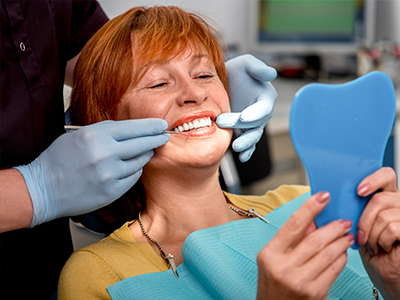
Smile Visualization
Take a smiling selfie and we’ll show you what Invisalign® treatment can do for you. Sometimes insurances can cover upto $2500 of invisalign treatment. Call our office or follow the link to find out.

All-on-6® is a full-arch dental implant approach that replaces an entire upper or lower set of teeth using six strategically placed implants. Rather than restoring individual teeth one-by-one, this method anchors a fixed prosthesis to multiple implants that work together to support chewing, speech, and overall oral function. The result is a stable, permanent restoration that behaves much more like natural teeth than removable dentures.
Because the prosthesis is secured to implants embedded in the jaw, patients often experience a marked improvement in bite strength and comfort. The prosthetic arch is engineered to distribute forces evenly across the implants, helping protect the surrounding bone and reducing movement that commonly occurs with traditional dentures. For many patients, this translates to greater confidence while eating, speaking, and smiling.
All-on-6® also emphasizes predictable long-term outcomes. With proper planning, surgical placement, and routine maintenance, the implants and the attached prosthesis can provide many years of reliable function. That predictability makes All-on-6® an attractive solution for adults seeking a durable, low-maintenance alternative to removable options.
The All-on-6® process begins with a comprehensive evaluation that includes clinical examination and three-dimensional imaging to map bone volume and anatomical landmarks. These diagnostic steps guide the placement plan so each implant is positioned for optimal support and long-term stability. A well-executed plan helps minimize surprises and improves the likelihood that the final restoration will meet both functional and aesthetic goals.
Surgically, six titanium implants are placed into the jaw in positions selected to maximize bone engagement and prosthetic support. In many cases, a temporary fixed arch can be attached the same day or shortly after surgery, allowing patients to leave with functioning teeth while the implants integrate with the bone. After a healing period during which osseointegration occurs, the permanent prosthesis is fabricated and seated to deliver a refined fit, occlusion, and appearance.
Throughout the process, the clinical team prioritizes comfort and communication. Local anesthesia and sedation options are available to manage anxiety and reduce discomfort during surgery. Detailed post-operative instructions and follow-up visits ensure healing progresses as expected and that the transition from temporary to permanent restorations is smooth and predictable.
Using six implants to support a full-arch prosthesis offers a balance of strength, redundancy, and load distribution. Compared with fewer implants, the additional anchors reduce the load on each fixture, which can improve long-term implant longevity and prosthetic stability. This configuration can be particularly helpful for patients with broader arches or stronger bite forces who need a robust solution.
Another practical advantage of the All-on-6® approach is its ability to reduce or avoid more invasive preparatory procedures. When the jawbone provides adequate volume in the intended implant zones, clinicians may often proceed without extensive grafting. Even when augmentation is necessary, careful planning and implant placement can streamline care and help achieve a reliable outcome without multiple separate surgeries.
The fixed nature of the All-on-6® prosthesis also preserves patient convenience in daily life. Cleaning routines are similar to natural teeth—regular brushing, flossing around implant-supported structures, and professional hygiene appointments—so patients can maintain oral health without the inconvenience of nightly removal or adhesive management often associated with removable dentures.
Recovery after All-on-6® varies by individual but typically involves a short initial healing phase followed by gradual return to normal activities. Immediately after surgery, patients may experience swelling, mild discomfort, and temporary dietary adjustments while tissues heal. The clinical team provides tailored guidance on pain control, oral hygiene, and safe eating practices to support an uncomplicated recovery.
Once the implants have integrated and the permanent prosthesis is in place, maintenance focuses on prevention and monitoring. Regular dental visits allow clinicians to evaluate the health of the implants, surrounding gum tissue, and the integrity of the prosthesis. Professional cleanings and periodic radiographs help detect issues early and ensure the implants continue to function as intended.
Good home care is essential to long-term success. Patients are instructed on techniques to clean around abutments and prosthetic interfaces, and on recognizing signs that warrant professional attention—such as loosening components, discomfort, or changes to bite. With consistent hygiene and periodic professional oversight, All-on-6® restorations can remain stable and functional for many years.
All-on-6® is a powerful option, but it is not a one-size-fits-all solution. Ideal candidates are adults who are missing most or all teeth in an arch or who have failing dentition that compromises function and quality of life. Candidates should have sufficient bone volume in critical regions or be open to augmentation when required. A careful clinical evaluation determines whether All-on-6® or an alternative implant strategy is the best path forward.
Decision-making also involves discussing patient priorities, medical history, and lifestyle factors. The team will review realistic expectations about the surgical process, the staged nature of the treatment (temporary to permanent prosthesis), and the oral care responsibilities that accompany implant-supported restorations. This collaborative planning ensures treatment aligns with personal goals for comfort, appearance, and long-term oral health.
The practice brings multidisciplinary expertise to each case, coordinating surgical planning, prosthetic design, and follow-up care to produce predictable outcomes. If you are considering full-arch restoration, an initial consultation will clarify whether All-on-6® fits your clinical picture and how a tailored treatment plan could restore function and confidence.
Summary: All-on-6® is a durable, fixed solution for full-arch tooth replacement that combines implant stability with the convenience of a permanent prosthesis. Carefully planned implant placement, attentive surgical care, and consistent maintenance are key to long-term success. To learn more about whether All-on-6® is a suitable option for your smile, contact Fuller Smiles San Fernando Valley for additional information and to schedule a consultation.

All-on-6 is a full-arch tooth replacement method that secures a fixed prosthesis to six strategically placed dental implants in either the upper or lower jaw. The prosthesis is supported by the implants and remains in the mouth full time, so it functions more like natural teeth than a removable denture. Because the prosthesis is fixed, patients avoid denture adhesives and the need to remove their teeth for cleaning.
Traditional removable dentures rest on the gums and often rely on suction or adhesives for retention, which can compromise chewing efficiency and comfort. All-on-6 implants transfer chewing forces to the jawbone, improving stability and helping preserve bone health over time. The result is generally a more secure bite and improved speech compared with removable options.
Good candidates for All-on-6 include patients who are missing most or all of their teeth or who have failing dentition that cannot be predictably restored with conventional crowns and bridges. Candidates should be in generally good health and free of untreated oral infections that could threaten implant success. A thorough clinical exam and imaging are required to evaluate bone volume, oral health, and overall suitability for implant surgery.
Certain medical conditions and lifestyle factors, such as uncontrolled diabetes or heavy tobacco use, can affect healing and implant success, so these are assessed during the evaluation. In many cases, bone quality that once required extensive grafting can be managed with careful implant placement and modern surgical techniques. When necessary, the treatment plan can include staged procedures to optimize outcomes and long-term function.
The process begins with a comprehensive consultation that includes a clinical exam, digital X-rays or CBCT imaging, and a review of medical history to develop a customized treatment plan. Diagnostic records allow the team to plan implant positions and design a provisional prosthesis that can often be placed the same day as surgery for immediate function. Surgical placement of the six implants is performed under appropriate anesthesia or sedation, and the implants are secured into the jawbone according to the treatment plan.
After implant placement, a period of healing follows while the implants integrate with the bone, typically measured in months rather than weeks. During this time, patients wear a temporary prosthesis that restores appearance and function while protecting the implants. Once integration is confirmed, the team fabricates and places the definitive prosthesis, which is adjusted for fit, occlusion and esthetics to provide long-term comfort and function.
All-on-6 provides a stable, fixed solution that greatly improves chewing efficiency and allows patients to eat a wider variety of foods compared with removable dentures. Because implants stimulate the jawbone, they help prevent the bone loss that commonly occurs after tooth loss and with long-term denture wear. Improved stability also supports clearer speech and reduces sore spots and gum irritation that can accompany ill-fitting removable appliances.
From a hygiene perspective, an implant-supported arch is cared for much like natural teeth, with routine brushing and professional maintenance to preserve soft tissue health and prosthetic integrity. The predictable support offered by six implants distributes functional loads more evenly across the arch, which can enhance prosthesis longevity and overall oral comfort. For many patients, these improvements translate to better nutrition, confidence, and quality of life.
Both All-on-6 and All-on-4 are full-arch implant solutions that support a fixed prosthesis, but they differ in the number and distribution of implants used. All-on-6 employs six implants per arch to provide additional anchorage and load distribution, which can be advantageous when bone volume is adequate and when clinicians prioritize maximal structural support. All-on-4 uses four implants, often with angled posterior implants to avoid anatomical structures, and can be beneficial when less bone is available or when a more cost- and time-efficient approach is appropriate.
The choice between the two approaches depends on clinical findings, patient-specific anatomy, and long-term treatment goals. A larger number of implants may offer enhanced mechanical redundancy and ease of future maintenance, while fewer implants can reduce surgical complexity in certain cases. A careful diagnostic workup and discussion with the surgical team will determine the optimal strategy for each patient.
All-on-6 surgery is performed using local anesthesia supplemented by sedation as needed to ensure patient comfort and a calm surgical experience. Options commonly include oral or intravenous sedation and, in some cases, monitored anesthesia care for patients who require deeper sedation. The choice of sedation is determined during the consultation after reviewing medical history, patient anxiety levels, and the scope of the planned procedure.
Local anesthesia provides targeted numbness of the surgical site while sedation helps patients relax and reduces awareness of the procedure. The surgical team follows strict safety protocols and monitors vital signs throughout the appointment to maintain a safe, comfortable environment. Patients receive clear preoperative instructions about fasting, medication adjustments and transportation arrangements when sedation is used.
Initial recovery from All-on-6 surgery generally involves several days of mild to moderate discomfort, swelling and temporary dietary modifications that emphasize soft foods. Pain and swelling are managed with prescribed or over-the-counter medications and cold compresses, and patients are given instructions for oral hygiene and temporary prosthesis care. Most people return to normal light activities within a few days, though strenuous exercise and heavy lifting are typically restricted for one to two weeks.
Implant integration is a gradual biological process that can take several months, during which patients attend follow-up visits to monitor healing and prosthesis stability. The temporary prosthesis protects the implants during this phase and allows functional use of the mouth. Once integration is confirmed, the definitive prosthesis is fabricated and delivered, completing the restorative phase and allowing patients to resume a full range of dietary choices and activities.
Implant components and the supporting bone can last many years when maintained properly, and the All-on-6 design offers durable support because loads are distributed across multiple implants. The long-term success of the restoration depends on regular professional care, meticulous oral hygiene and routine examinations to detect and manage issues early. Prosthetic teeth may require periodic maintenance such as tightening, relining or component replacement over time, but the underlying implants can remain stable for decades with proper care.
Maintenance typically includes daily brushing, cleaning under and around the prosthesis with recommended interdental tools, and professional cleanings every three to six months based on the clinician's guidance. Regular follow-up visits include evaluation of soft tissue health, implant stability and occlusion to ensure the prosthesis continues to function as intended. Adhering to these maintenance protocols helps protect both the implants and the surrounding oral structures.
As with any surgical procedure, All-on-6 carries risks that include infection, bleeding, swelling and temporary nerve irritation that may cause altered sensation. Implant failure is uncommon but can occur if integration is incomplete, if infection develops, or if excessive force is applied during healing. Careful patient selection, sterile surgical technique and adherence to postoperative instructions reduce the likelihood of complications.
Longer-term risks include peri-implantitis, a condition in which inflammation affects the tissues around an implant, and mechanical wear or component loosening in the prosthesis. These issues are manageable when identified early through routine monitoring and professional maintenance. The surgical and restorative team will explain risk-reduction strategies and provide a follow-up plan tailored to each patient's needs.
Bone grafting is sometimes necessary when there is insufficient jawbone to support implants, but the All-on-6 protocol can often reduce the need for extensive grafting because the implant positions are planned to maximize existing bone. Advanced imaging such as CBCT allows the team to evaluate bone volume and density precisely and to plan implant placement that optimizes available anatomy. In cases of severe bone loss, grafting or alternative strategies may still be part of the comprehensive treatment plan.
When grafting is recommended, procedures can range from localized augmentation to more extensive reconstruction depending on the clinical situation. The goal is to create a stable foundation for implants and to maximize long-term success. The surgical plan will outline whether grafting is required, the type of graft material to be used, and the expected timeline for healing before implant placement if staged treatment is necessary.
Fuller Smiles San Fernando Valley uses a multidisciplinary approach that combines digital imaging, surgical planning and restorative expertise to design individualized All-on-6 treatment plans. Every case begins with a comprehensive evaluation that includes CBCT imaging and clinical assessment to map implant positions and prosthetic goals. The team coordinates surgical and laboratory steps to fabricate temporaries and final restorations that meet functional and esthetic objectives.
The practice emphasizes patient education, careful intraoperative technique and scheduled follow-up to monitor healing and prosthesis performance. By integrating modern technology with experienced clinical judgment, the office aims to deliver predictable results and a streamlined treatment experience. Patients receive detailed aftercare instructions and a maintenance schedule to protect their investment in oral health and long-term function.
Take a smiling selfie and we’ll show you what Invisalign® treatment can do for you. Sometimes insurances can cover upto $2500 of invisalign treatment. Call our office or follow the link to find out.