The image features a man smiling at the camera with a graphic overlay that includes text, a logo, and an advertisement for a dental clinic.

Same-day ceramic restorations that combine precision, comfort, and cosmetic appeal — designed around your schedule.

A faster path to a finished restoration

CEREC streamlines restorative dentistry by letting us design, mill, and place ceramic restorations in a single appointment. For patients, that means fewer visits, less time in the chair overall, and a complete, natural-looking restoration without the temporary crown stage that used to be standard.

Because the process is performed chairside with digital tools, clinicians can control each step from preparation to final polishing. The result is a restoration that matches the shape and shade of surrounding teeth while preserving as much natural tooth structure as possible.

This approach suits patients who value convenience but still want high-quality, long-lasting results. It’s particularly helpful for those with busy schedules, travel constraints, or an immediate need to restore function and aesthetics.
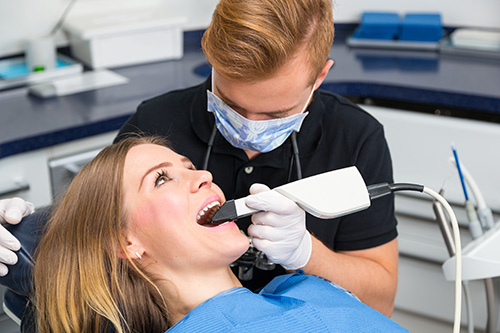
The image shows a dental hygienist performing a teeth cleaning procedure on a patient in a dental office setting.

What a single-visit crown appointment looks like

The CEREC appointment begins with a careful evaluation and tooth preparation, similar to traditional crown workflows. Instead of taking physical impressions, we capture a detailed 3D scan of the prepared tooth and the surrounding bite with an intraoral scanner. This scan provides an accurate foundation for the restoration design.

Once the digital model is created, the restoration is designed using CAD software right in the operatory. You’ll be able to see how your crown or onlay will fit and feel before fabrication begins. When the design is finalized, a compact milling unit fabricates the restoration from high-strength ceramic while you wait comfortably in the treatment room.

After milling, the restoration is finished, stained or glazed when needed, and evaluated for fit and occlusion. Final bonding completes the procedure, leaving you with a functional restoration that blends with your smile — all in the same visit.

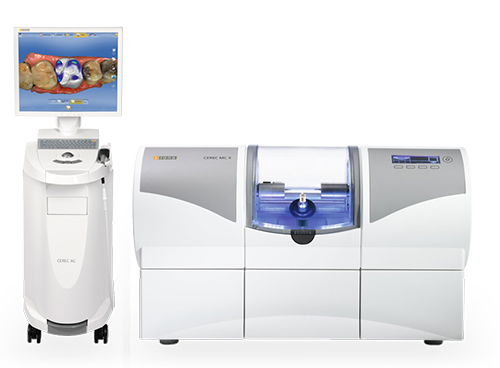
The image shows a dental office setup with a digital display screen, a dental machine, and a 3D printer on a table.

The technology behind reliably precise restorations

At the heart of CEREC is an integrated CAD/CAM platform: high-resolution intraoral scanning, sophisticated design software, and a chairside milling machine. The scanner captures fine anatomic detail, which the software converts into a three-dimensional model that guides fabrication with tight tolerances.

The ceramic blocks used for milling are engineered for strength and esthetics; they are available in a range of translucencies and shades to recreate natural tooth appearance. Milling followed by finishing techniques such as staining and glazing produces a restoration with lifelike surface texture and color integration.

Because this workflow reduces manual transfers between offices and laboratories, it minimizes opportunities for error and increases predictability. The digital files can also be archived, making follow-up adjustments or future restorations easier to plan.

A woman with curly hair, wearing a white shirt and black pants, stands confidently in an office setting with a blue chair and desk in the background.

Durability and appearance that patients appreciate

Modern ceramics used with CEREC are both durable and aesthetically pleasing. When properly designed and bonded, ceramic crowns, inlays, and onlays resist wear and staining while providing a natural optical match to adjacent teeth. This combination of form and function supports long-term oral health and confident smiles.

Clinical longevity depends on case selection, occlusal considerations, and home care, but CEREC restorations perform well for many common restorative needs. Because the procedure preserves tooth structure through conservative preparations, it helps maintain tooth integrity over time.

For patients who prioritize a discreet, tooth-colored restoration, CEREC offers an excellent balance of strength and beauty without relying on metal substructures or lengthy lab production cycles.

Who is a good candidate and what to expect after treatment

CEREC is appropriate for a wide range of restorative cases, including single crowns, inlays, onlays, and certain veneers. Good candidacy is determined by the amount of remaining tooth structure, occlusion (how your teeth meet), and whether there are complicating factors like active decay or severe periodontal issues that need treatment first.

After placement, patients can expect normal post-operative sensations such as mild sensitivity for a few days while the tooth adjusts to the restoration. Proper bonding and occlusal adjustment are essential to avoid pressure points and ensure comfortable chewing. We provide detailed aftercare guidance to protect the restoration and the adjacent teeth.

Follow-up visits allow us to confirm fit, function, and patient comfort. With regular dental hygiene and routine checkups, a well-designed CEREC restoration can serve as a dependable solution for many years.

Choosing an advanced, efficient restorative approach can make a meaningful difference in the way patients experience dental care. At Fuller Smiles San Fernando Valley, our team uses CEREC technology to deliver precise, esthetic restorations while minimizing appointments and maximizing comfort. If you’re interested in learning whether a same-day ceramic restoration is right for you, please contact us for more information.

Frequently Asked Questions

Frequently Asked Questions

What are CEREC® same-day crowns?

+

Today, there's no need to merely imagine how nice it would be to have a dental crown fabricated in a single visit. With CEREC technology and advanced systems of care, multiple trips to the dentist are a thing of the past! Now, one appointment is all it takes for our skilled and experienced dentist to design, fabricate, and place a naturally beautiful and long-lasting same-day crown. And, best of all, unlike conventional methods of care, you won't have to endure messy dental impressions, wear a temporary crown, or wait weeks for your permanent restoration to come back from the laboratory.

How are CEREC® same-day crowns made?

+

Offering a level of precision and comfort that exceeds conventional methods of care, CEREC technology is nothing short of amazing! Advanced CAD/CAM technology, which stands for computer-aided design and computer-aided manufacturing, enables our dentist to translate images from an optically scan tooth into a 3D virtual model upon which a custom crown can be digitally designed. Once this step is done, the detailed specs are then wirelessly transmitted to a chairside 3D milling machine to fabricate your new ceramic crown while you wait!

What are the benefits of CEREC® same-day crowns?

+

With conventional methods of care, a dental crown can take two to three visits to fabricate and place. However, thanks to the benefits of CEREC technology, we can prepare a tooth, then design, fabricate, and place your new crown, all while you wait.

With CEREC same-day crowns, there's none of the mess of conventional dental impressions, wearing dental temporaries, or waiting for the final crown to come back from the lab. Once the prepared tooth is optically scanned and the restoration digitally designed, your new crown can be milled from the highest quality of dental ceramics that very same visit.

Will my CEREC® same-day crown look natural?

+

CEREC same-day crowns and restorations are fabricated from the highest quality of dental ceramics. Because dental porcelain reflects light in much the same way as dental enamel, your new crown will look flawless, completely natural, and blend seamlessly with your smile.

Do CEREC® same-day crowns last a long time?

+

A CEREC same-day crown offers much more than a convenient approach to getting a dental crown. It is also a high quality, naturally beautiful, extremely durable, and long-lasting dental restoration! The fact is, with proper oral hygiene and routine dental care your new crown will serve your smile well for many years to come.

What is CEREC and how does it work?

+

CEREC is a chairside CAD/CAM system that lets a dentist design and fabricate ceramic restorations in a single visit. The process begins with a digital intraoral scan that captures detailed three-dimensional images of the prepared tooth and surrounding dentition. Those images are used to design a precise restoration on specialized software, eliminating the need for traditional impressions.

Once the design is approved by the dentist, the data is sent to a milling unit that mills the restoration from a block of high-strength ceramic while the patient waits. The milled piece is then tried in, adjusted for fit and bite, stained or glazed as needed, and permanently bonded in place. This integrated workflow shortens treatment time and reduces the number of appointments required for a completed restoration.

What types of restorations can be made with CEREC?

+

CEREC is commonly used to fabricate single crowns, inlays, onlays, and certain veneers using high-quality ceramic materials. These restorations are suitable for both anterior and posterior teeth and can restore function and natural appearance in a single appointment. The system is especially useful when a patient needs a durable, esthetic restoration without multiple visits.

There are some restorative situations that require laboratory techniques or alternative materials, and not every case is ideal for a chairside restoration. Your dentist will evaluate the tooth structure, occlusion, esthetic demands, and overall case complexity to determine whether a CEREC restoration is the best option. When appropriate, CEREC provides a versatile solution for many common restorative needs.

How long does a CEREC appointment typically take?

+

Most single-unit CEREC restorations are completed in one appointment, often ranging from about 60 to 120 minutes depending on case complexity and any preparatory work. Time is used for tooth preparation, digital scanning, digital design, milling, final adjustments, and bonding. Because the milling and finishing steps occur in the office, there is no waiting period for an external laboratory to fabricate the restoration.

Certain factors can extend the appointment, such as additional decay removal, root canal therapy, complex occlusal adjustments, or customization of shade and characterization. Your dentist will discuss the expected chair time during the consultation and plan the visit to minimize interruptions. Efficient scheduling and modern chairside workflows typically make the single-visit approach convenient for patients with busy schedules.

Are CEREC restorations as durable as traditional lab-made restorations?

+

CEREC restorations are milled from durable ceramic materials such as lithium disilicate and zirconia, which offer excellent strength and wear resistance for everyday function. When designed and bonded properly, these restorations perform similarly to laboratory-fabricated ceramic crowns in many clinical situations. Longevity depends on material selection, the quality of the adhesive bond, and meticulous clinical technique during preparation and cementation.

Patient-specific factors also play a significant role in durability, including oral hygiene, bite forces, and parafunctional habits such as grinding or clenching. Regular dental checkups allow the dentist to monitor the restoration, make occlusal adjustments when necessary, and address any wear or marginal concerns early. With proper care and professional follow-up, CEREC restorations can provide long-lasting, functional results.

Will getting a CEREC crown be painful?

+

The tooth preparation and placement of a CEREC restoration are performed under local anesthesia, which prevents pain during the procedure for most patients. During treatment patients may feel pressure or vibrations from the milling and finishing steps, but significant discomfort is uncommon. If a patient feels anxious, the clinical team can discuss behavior management or sedation options available in the office to promote relaxation.

After the appointment some patients experience mild sensitivity or tenderness around the treated tooth for a few days, particularly to temperature or biting force. This postoperative sensitivity usually diminishes with routine care and over-the-counter analgesics if recommended by the dentist. If sensitivity or pain persists beyond a few days, patients should contact the office so the dentist can evaluate and address any concerns.

Are CEREC restorations a good option for front teeth where appearance is critical?

+

CEREC ceramics are capable of producing highly esthetic anterior restorations with excellent color matching and surface characterization when shade selection and finishing are handled carefully. Digital design allows for precise control of contours and proportions, and final staining or glazing can enhance translucency and natural appearance. In many cases a CEREC crown or veneer can meet the esthetic demands of front teeth while providing the benefit of same-day treatment.

Some extremely demanding cosmetic cases may benefit from layered laboratory techniques or specialized materials that require additional artistic workflows. Your dentist will discuss the anticipated esthetic outcome and may recommend the most appropriate approach based on the location of the tooth, smile dynamics, and cosmetic expectations. When a same-day esthetic solution is suitable, CEREC offers a predictable path to a pleasing anterior restoration.

How should I care for a CEREC restoration after placement?

+

Care for a CEREC restoration is similar to care for a natural tooth: maintain daily brushing with a nonabrasive fluoride toothpaste and flossing to keep margins clean and prevent recurrent decay. Routine dental examinations and professional cleanings allow the dentist to check the integrity of the restoration, monitor margins, and assess occlusion. Avoiding very hard foods and using caution with habits like ice chewing helps protect the restoration from chipping or fracture.

If you have a history of grinding or clenching, your dentist may recommend an occlusal guard to protect the restoration and surrounding dentition. Promptly report any changes in bite, roughness at the margin, or persistent sensitivity so adjustments can be made before small issues become larger problems. With consistent home care and regular professional monitoring, a CEREC restoration can remain functional and esthetic for many years.

Can CEREC be used to replace multiple adjacent teeth or create bridges?

+

CEREC is most commonly used for single-unit restorations but can be used for short-span restorations in selected cases depending on the material and design considerations. Fabricating multi-unit fixed bridges with chairside systems requires careful planning and may be limited by span length, load distribution, and the need for a precise laboratory workflow for complex cases. For longer spans or highly loaded posterior situations, traditional laboratory-fabricated prosthetics are often recommended for structural reliability.

Your dentist will evaluate the number of missing teeth, the condition of the abutment teeth, occlusal forces, and esthetic requirements before recommending a chairside or lab-based solution. In many instances a hybrid approach or implant-supported prosthesis may offer the most predictable long-term outcome for replacing multiple adjacent teeth. Treatment planning focuses on durability, function, and preserving surrounding oral structures.

How long can I expect a CEREC restoration to last?

+

The lifespan of a CEREC restoration varies with material choice, oral environment, patient habits, and the quality of the preparation and bonding procedure. Clinical experience and published studies indicate that properly designed and bonded ceramic restorations can provide many years of service, often comparable to conventional lab-fabricated crowns. Regular professional care and good oral hygiene significantly contribute to long-term success.

Factors such as occlusal stress, bruxism, and the extent of remaining tooth structure can shorten or lengthen the functional life of a restoration. During routine visits the dentist will assess wear, marginal integrity, and contact points so any necessary maintenance can be performed early. With appropriate case selection and follow-up care, many patients enjoy durable results from their chairside ceramic restorations.

What are the risks or limitations of choosing a CEREC restoration?

+

Like any restorative option, CEREC restorations have limitations and potential risks that must be considered during treatment planning. Some complex or heavily broken-down teeth, long-span prostheses, or highly demanding cosmetic cases may be better served with laboratory techniques or alternative materials. There is also a small risk of marginal mismatch, fracture, or sensitivity if occlusion or bonding protocols are not ideal.

Before recommending a CEREC restoration, the dentist will conduct a comprehensive examination, discuss the expected outcome, and explain alternative options so patients can make an informed decision. Fuller Smiles San Fernando Valley emphasizes careful case selection and clinical technique to minimize risk and optimize restorative performance. Follow-up appointments allow the team to make fine adjustments and address any concerns early to support a successful long-term result.

Smile Visualization

Take a smiling selfie and we’ll show you what Invisalign® treatment can do for you. Sometimes insurances can cover upto $2500 of invisalign treatment. Call our office or follow the link to find out.

Connect With Us

Contact Us
Get Directions
Book Online
Northridge
Monday
8:00 am - 5:00 pm
Tuesday
10:00 am - 7:00 pm
Wednesday
8:00 am - 5:00 pm
Thursday
10:00 am - 7:00 pm
Friday
8:00 am - 5:00 pm
Saturday
8:00 am - 2:00 pm (alternating)
West Hills
Monday
9:00 am - 5:00 pm
Tuesday
9:00 am - 5:00 pm
Wednesday
9:00 am - 5:00 pm
Thursday
9:00 am - 5:00 pm
Friday
9:00 am - 2:00 pm

This is an example popup