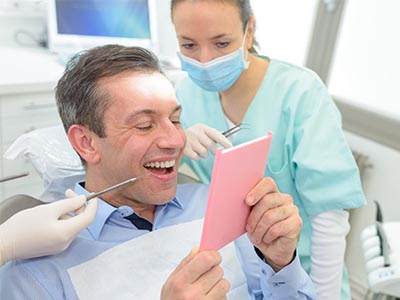
Smile Visualization
Take a smiling selfie and we’ll show you what Invisalign® treatment can do for you. Sometimes insurances can cover upto $2500 of invisalign treatment. Call our office or follow the link to find out.

At Fuller Smiles San Fernando Valley, we help people restore the form and function of their smiles after tooth loss. A well-designed dental bridge can close gaps, stabilize surrounding teeth, and return normal chewing and speech patterns with a fixed, natural-looking solution. This page explains how bridges work, the options available, what to expect during treatment, and how to protect your new restoration for years to come.
When a tooth is lost, the consequences extend beyond the empty space you see in the mirror. Adjacent teeth tend to drift into the gap over time, which can change bite relationships and create areas that are harder to clean. Those shifts increase the risk of cavities and gum problems in the neighboring teeth, which in turn can accelerate further tooth loss.
Missing teeth also alter how chewing forces are distributed. Without a full dental arch, the remaining teeth must absorb more pressure, often leading to excessive wear, sensitivity, or pain in the jaw joints. Over months and years this imbalance can change facial support and contribute to a prematurely aged appearance.
Addressing tooth loss early helps preserve both oral health and daily comfort. A fixed restoration such as a bridge restores normal function and can prevent the cascade of secondary issues that begin after a tooth is removed.
A dental bridge is a fixed prosthesis that replaces one or more consecutive missing teeth by anchoring artificial teeth (pontics) to supporting structures. Those anchors may be adjacent natural teeth prepared for crowns or dental implants placed into the jaw. The result is a single contiguous restoration that fills the gap and becomes part of the bite.
Because bridges are permanently attached, they behave more like natural teeth than removable alternatives. A well-made bridge restores speech and chewing efficiency, keeps neighboring teeth in their correct positions, and delivers a seamless appearance when matched to the color and contour of your existing teeth.
Advances in restorative materials mean bridges can be strong, long-lasting, and highly aesthetic. Ceramic and zirconia options in particular offer lifelike translucency and stain resistance while providing excellent durability for everyday use.
Choosing a bridge depends on several factors: how many teeth are missing, the condition of the adjacent teeth, the quality and volume of jawbone, and each patient’s long-term goals. For one or two missing teeth with healthy neighboring teeth, a traditional fixed bridge is often a predictable choice. When surrounding teeth are compromised or to avoid altering them, an implant-supported bridge may be a better option.
Cantilever and resin-bonded (Maryland-style) bridges are alternatives used in specific situations where support is limited or the forces are lower, such as replacing a single front tooth. These designs place different demands on supporting structures, so candidacy is determined case by case based on clinical findings and diagnostic imaging.
During your consultation, your dentist will review x-rays or 3D scans and discuss the practical pros and cons of each approach. The decision balances durability, aesthetics, preservation of healthy tooth structure, and the long-term health of surrounding tissues.
Treatment begins with a comprehensive evaluation to verify that the mouth is healthy and ready for restoration. That typically includes checking for gum disease, assessing tooth stability, and taking detailed images. If periodontal concerns or cavities are present, those issues are addressed first so the bridge has a solid foundation.
For a traditional bridge, the supporting teeth are prepared by removing a small amount of enamel to make room for crowns that will anchor the pontic(s). Impressions or digital scans then capture the prepared teeth so the laboratory can fabricate the final restoration. A temporary bridge protects the prepared teeth while the permanent piece is made.
If implants are chosen to support the bridge, the process includes surgical placement of implants followed by a healing period during which the implants integrate with the bone. Depending on the case, temporary restorations may be used until the implant sites are stable enough for the final prosthetic. Throughout, the clinical team will explain sedation options, post-operative care, and timeline expectations to keep patients comfortable and informed.
Once in place, a bridge requires conscientious daily care to remain healthy and functional. Regular brushing and the use of interdental cleaners or floss threaders beneath the pontic are essential to remove trapped food and plaque. Professional cleanings and routine exams help the dental team monitor the restoration and the health of surrounding gums and teeth.
A few simple habits extend the life of a bridge: avoid using teeth as tools, minimize very hard or sticky foods, and wear a nightguard if you grind or clench. Regular checkups let your dentist catch early signs of wear or inflammation so adjustments or repairs can be made before problems progress.
Bridges are a durable, reliable solution for many people, but their long-term success depends on a clean environment and stable support from the remaining teeth or implants. With consistent care and the guidance of your dental team, a well-designed bridge can serve well for many years.
In summary, dental bridges are a practical, fixed way to restore missing teeth, protect surrounding structures, and improve oral function and appearance. If you’d like to learn which bridge option is best for you, please contact us for more information and to schedule a consultation with our team at Fuller Smiles San Fernando Valley.

Your new bridge is customized to the exact specifications of your smile. Before cementing to the underlying teeth or affixing it to the supporting implants, the shade, occlusion, and all aspects of its fit are carefully checked. In addition to being designed to blend seamlessly with your smile, it's also made to suit your bite and withstand all manner of oral function. We take great care to make sure your new restoration looks great, fits well, and that your bite feels comfortable.
Replacing missing teeth with a dental bridge is a worthwhile investment in the look, health, and function of your smile. While many dental insurances offer coverage for a dental bridge, and some toward the cost of implants, the benefits and amounts can vary significantly from plan to plan. At the office of Fuller Smiles San Fernando Valley, we understand the financial considerations involved in care and do all we can to help patients begin treatment without any additional stress or delay. In addition to doing our best to optimize your dental benefits, we also offer several payment and financing options. Feel free to contact our office if you have any questions on the cost of care, dental insurances, financing plans, or acceptable forms of payment.
Now that your new permanent crown or bridge is in place, it's essential to maintain good oral hygiene. With proper care, your new restorations will last for years to come. Make sure to brush and floss as instructed. We'll show you how to floss under your dental bridge to keep your new smile clean and bright. Remember to make appointments for your routine checkups and professional cleanings.
The standard answer is that with routine dental visits and good home care, a bridge can last ten to fifteen years, and in many cases, much longer.
At the office of Fuller Smiles San Fernando Valley, we fabricate your bridge from the highest quality dental materials to achieve the most cosmetically pleasing and lifelike results of care. It's also customized to the exact specifications of your smile and designed for optimal aesthetics, strength, and stability. Once fabricated and cemented into place, you'll feel confident sharing your smile, speaking, and eating your favorite foods.
As your trusted partner in care, we analyze every aspect of your smile to develop a treatment plan that provides aesthetically pleasing, healthy, and long-lasting results of care.
For more information on dental bridges, or any services we provide, give us a call today.
A dental bridge is a fixed restoration that replaces one or more adjacent missing teeth by spanning the gap with artificial teeth called pontics. The bridge is anchored to natural teeth that have been prepared for crowns or to dental implants that act like tooth roots, providing stability and restoring chewing function. Bridges restore the appearance and basic function of the bite while preventing adjacent teeth from drifting into the empty space.
By redistributing biting forces and filling gaps, a properly designed bridge helps maintain proper alignment and occlusion, which supports long-term oral health. Modern materials such as porcelain, porcelain-fused-to-metal, and zirconia make bridges both strong and lifelike in color and texture. Your dentist will explain which design best balances strength, aesthetics, and preservation of surrounding teeth for your situation.
Common bridge types include the traditional fixed bridge, cantilever bridge, Maryland (resin-bonded) bridge, and the implant-supported bridge. A traditional bridge uses crowns on both sides of the gap to support pontics, a cantilever attaches on only one side, a Maryland bridge relies on bonded metal or ceramic wings attached to adjacent teeth, and an implant-supported bridge is held by dental implants rather than natural teeth.
Each type has specific indications based on the number and location of missing teeth, the health of neighboring teeth, esthetic goals, and bone availability. Your dentist will review clinical findings and long-term considerations to recommend the option that best preserves function, appearance, and oral health.
Good candidates for a traditional fixed or cantilever bridge typically have healthy supporting teeth on either side of the space that can be prepared for crowns and sufficient bone support. Patients with significant gum disease, widespread decay, or insufficient tooth structure may require other approaches such as implant-supported restorations or preliminary periodontal care before bridge placement.
At Fuller Smiles San Fernando Valley, our clinicians perform a comprehensive exam including dental and periodontal assessment, bite analysis, and diagnostic imaging to determine candidacy. We consider overall health, oral hygiene, and long-term goals to recommend a predictable treatment path that meets both functional and aesthetic needs.
Preparation for a traditional fixed bridge begins with a diagnostic workup that often includes X-rays and impressions to plan the restoration and verify the supporting teeth are suitable. During the first clinical visit the abutment teeth are shaped to receive full-coverage crowns, impressions are taken for the laboratory, and a temporary bridge is placed to protect the prepared teeth while the permanent restoration is fabricated.
Patients commonly experience mild sensitivity and gum soreness after preparation, which typically resolves in a few days to weeks as tissues adapt. Before final cementation the dentist will check fit, shade, contours, and occlusion to ensure comfort and proper bite function, and minor adjustments may be made after placement if needed.
An implant-supported bridge begins with a thorough evaluation that may include three-dimensional imaging to assess bone quantity and the ideal implant positions for predictable support. Implant placement is a minor outpatient surgical procedure where titanium fixtures are inserted into the jawbone; a healing interval of several months is usually required for osseointegration, although temporary restorations can sometimes be used for immediate esthetics.
Once the implants have integrated, the restorative phase involves attaching abutments and fabricating the permanent bridge to achieve proper fit, occlusion, and appearance. Because implants preserve bone and do not rely on adjacent natural teeth for support, they are often recommended when preserving long-term jaw structure and function is a priority.
The longevity of a dental bridge varies, with many lasting 10 years or longer when properly designed and maintained; however, individual outcomes depend on material choice, oral hygiene, bite forces, and the health of supporting structures. Porcelain and zirconia materials can resist wear and staining, but the underlying abutment teeth or implants must remain healthy to support the restoration over time.
Factors that negatively affect lifespan include untreated gum disease, recurrent decay on abutment teeth, bruxism or heavy bite forces, and poor daily cleaning around the restoration. Regular dental checkups and professional cleanings allow the team to monitor bridge integrity and address minor issues before they become failures.
Daily cleaning around a bridge is essential to prevent plaque buildup, decay on abutment teeth, and gum disease; this includes brushing twice a day and using floss or interdental cleaners to remove debris beneath pontics. For bridges with a solid pontic contact, specialized flossing techniques or floss threaders, interdental brushes, and water flossers can help access the undersurface and adjacent areas that standard floss cannot reach.
Maintaining a routine of professional dental checkups and cleanings complements home care and allows your dentist to evaluate the bridge fit and supporting tissues. Avoiding hard or excessively sticky foods on a newly placed restoration and discussing any nighttime grinding with your dentist will also help prolong the life of the bridge.
Complications with bridges can include decay of the abutment teeth, loosening or debonding of the restoration, fracture of the pontic or framework, and periodontal disease around the supporting teeth. In implant-supported bridges, possible issues include peri-implant mucositis or peri-implantitis if hygiene is inadequate, and rare implant failure related to infection or overload.
Early detection is key: routine exams help catch weak spots, recurrent decay, or tissue changes before major problems develop, and many issues can be resolved with repair, replacement, or adjunctive periodontal treatment. If you notice persistent sensitivity, looseness, bad taste, or swelling near a bridge, contact your dental provider promptly for evaluation.
Dental bridges offer a fixed solution that can be less invasive than placing multiple implants and typically restore function and esthetics efficiently when adjacent teeth are suitable for crowning. Implant-supported restorations preserve jawbone by providing root-like stimulation and avoid altering adjacent healthy teeth, while removable partial dentures are less invasive but typically offer less stability and can affect speech or comfort.
The best choice depends on oral health, bone availability, the condition of neighboring teeth, long-term functional goals, and patient preference. A careful clinical evaluation provides the information needed to weigh the trade-offs of invasiveness, preservation of natural tooth structure, maintenance needs, and expected longevity.
After placement of a traditional fixed bridge patients can expect mild soreness and sensitivity for a few days, which usually responds well to over-the-counter pain relief and careful oral hygiene. For implant-supported bridges the surgical sites require a longer healing period; your dentist will provide specific post-operative instructions for pain control, swelling management, oral rinses, and activity restrictions to support proper osseointegration.
Follow-up appointments are important to check fit, occlusion, and tissue health, and to make any necessary adjustments after the bridge is placed. The dental team at Fuller Smiles San Fernando Valley schedules routine recalls to monitor restorations and supporting tissues so that any concerns are addressed early and your bridge continues to function and look its best.
Take a smiling selfie and we’ll show you what Invisalign® treatment can do for you. Sometimes insurances can cover upto $2500 of invisalign treatment. Call our office or follow the link to find out.