Smile Visualization
Take a smiling selfie and we’ll show you what Invisalign® treatment can do for you. Sometimes insurances can cover upto $2500 of invisalign treatment. Call our office or follow the link to find out.

An onsite dental laboratory changes the way a practice approaches restorative dentistry by bringing fabrication and finishing steps into the same clinical ecosystem. When technicians and clinicians share a physical workspace, communication is direct and immediate: adjustments can be discussed in real time, materials can be evaluated together, and subtle details like shade, contour, and occlusal relationships are addressed with full clinical context. This collaborative model reduces the back-and-forth that often accompanies offsite fabrication and leads to restorations that are more consistent with the dentist’s treatment goals.
Having a lab on the premises also supports a practice’s ability to respond quickly to patient needs. Whether a restoration requires a last-minute adjustment or a repaired appliance is needed after an accident, the logistics of transporting pieces back and forth are eliminated. That practical advantage translates into fewer appointments, less time spent in temporary restorations, and an overall smoother experience for patients who value predictability and efficiency in their care.
From an outcomes perspective, in-house labs can help clinicians maintain stronger oversight of quality control. Technicians have access to the same diagnostic records and can observe clinical conditions firsthand, which improves interpretation of impressions and digital scans. When the fabrication process is integrated with chairside care, the final restoration is the product of a fully informed workflow rather than a sequence of disjointed steps.
Precision is a central goal of any restorative procedure, and an onsite lab supports that by enabling iterative refinement. Skilled technicians can try-in and refine ceramic margins, adjust proximal contacts, and verify that restorations meet exacting functional requirements before final glazing. This hands-on capability reduces the likelihood of adjustments after cementation and helps preserve tooth structure by avoiding repeated removal and re-preparation.
Esthetics benefit in parallel with fit. Shade-matching and characterization are often the details that make a crown or veneer appear natural, and those subtleties are easier to capture when the clinician and technician collaborate directly. With immediate access to the patient’s shade, photos, and intraoral views, technicians can layer ceramics or modify textures to mimic natural enamel, resulting in restorations that integrate with the smile rather than stand apart from it.
In addition, onsite labs often facilitate better control over occlusion and function. By assessing how a restoration interacts with opposing teeth and articulating models in-house, technicians can preempt issues related to bite dynamics. The result is prosthetics that not only look right but also perform reliably under the forces of everyday chewing and speaking.
One of the most tangible benefits of an in-house dental lab is the reduced turnaround time for restorations. Traditional workflows that rely on external labs can introduce days or even weeks of delay, especially when multiple refinements are necessary. Onsite fabrication compresses that timeline because impression corrections, shade verifications, and minor redesigns can happen within hours or a single follow-up appointment.
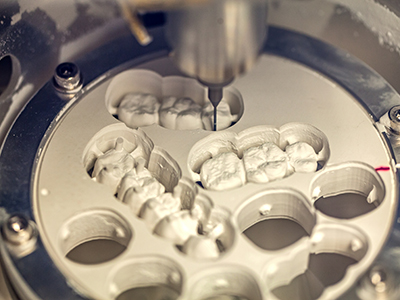
Faster turnaround does not mean cutting corners. Modern in-house labs combine craftsmanship with contemporary technology—such as CAD/CAM design, milling machines, and digital scanning—to deliver precise results quickly. This hybrid approach preserves the attention to detail associated with artisanal lab work while leveraging digital tools to speed up repetitive or time-sensitive stages of production.
From a patient-experience standpoint, shorter waits minimize the time spent in temporaries and the inconvenience of multiple visits. Clinicians can present treatment plans that incorporate practical timelines, and patients often appreciate the reassurance of knowing their restoration is being crafted and inspected in the same place where they receive care.
Contemporary onsite labs work with a wide range of restorative materials selected for durability, esthetics, and biocompatibility. High-strength ceramics like zirconia and lithium disilicate are common choices for crowns and bridges because they offer both strength and lifelike translucency. For implant prosthetics and full-arch restorations, layered ceramics and reinforced frameworks are used to balance fracture resistance with natural-looking contours.
Technology plays a major role in ensuring consistent outcomes. CAD/CAM workflows translate digital impressions into finely tuned restorations via milling and sintering processes, while 3D printing is increasingly used for models, surgical guides, and provisional appliances. These tools enable reproducibility and precision while allowing technicians to apply traditional finishing techniques—staining, glazing, and polishing—to achieve the final esthetic effect.
Quality control is embedded in material selection and process verification. Onsite labs can maintain inventory of proven materials, monitor batch integrity, and perform stepwise inspection during fabrication. When a restoration passes both clinical and laboratory checks before placement, clinicians and patients benefit from fewer surprises and longer-lasting results.
Additionally, the integration of digital radiography and intraoral scanners facilitates better planning for complex rehabilitations. When technicians can access digital records such as CBCT images or scanned occlusal relationships, they can design restorations that respect anatomical constraints and prosthetic requirements from the outset.
Long-term success of dental restorations depends on proper maintenance and timely repairs. An onsite lab strengthens a practice’s capacity to respond when a restoration chips, a denture requires relining, or an appliance needs rebasing. Repair procedures that might otherwise require lengthy shipping and external scheduling can often be completed the same day or within a short timeframe, preserving function and comfort for the patient.
Preventive maintenance is another area where an integrated lab adds value. Technicians can advise on appropriate materials for provisional restorations, recommend design features that simplify future maintenance, and fabricate replacement parts that fit the original prosthesis precisely. That continuity of care reduces the risk of cumulative wear or misfit over time.
For clinicians, having a lab nearby means easier collaboration on complicated cases—whether refining shade transitions, modifying occlusal schemes, or tailoring prostheses to changes in the patient’s oral anatomy. This continuity leads to more predictable follow-through and a smoother lifecycle for each restoration.
Patients often find reassurance in knowing that fabrication, adjustment, and repair are managed within the same practice environment. The combination of technical skill and proximity creates a dependable framework for restorative dentistry, where issues are addressed promptly and with full access to the patient’s clinical history and records.
In summary, an onsite dental laboratory brings precision, speed, and enhanced collaboration to restorative care. By streamlining communication between clinicians and technicians and by leveraging modern materials and technology, the onsite model supports restorations that are esthetic, functional, and durable. Fuller Smiles San Fernando Valley incorporates these principles to ensure repairs, adjustments, and custom prosthetics are handled with close oversight. Contact us for more information about how an in-house dental lab can improve your treatment experience.

A dental lab is a specialized facility where technicians fabricate, repair and finish custom dental restorations and appliances based on prescriptions from a dentist. These restorations range from crowns and bridges to dentures, veneers and orthodontic devices, and they are crafted to match a patient’s anatomy and bite. The lab translates clinical records—impressions, digital scans and shade information—into physical restorations that restore function and appearance.
Dental labs combine technical skill, material science and precision equipment to achieve reliable results. Technicians use models, CAD/CAM software and milling or 3D-printing systems to produce components that meet clinical specifications. The partnership between the dentist and the lab is a key part of predictable restorative care.
An on-site dental lab streamlines communication between the clinical team and the technicians, which improves accuracy and reduces the need for multiple adjustments. When technicians are physically available, shade matching, adjustments and design decisions can be made collaboratively during patient appointments, improving the aesthetic and functional outcome. Faster feedback loops also reduce turnaround time for repairs, remakes and final restorations without compromising quality.
Having a lab in the same facility enhances quality control because the practice can monitor processes and materials closely. It also allows for more personalized solutions, as technicians become familiar with the practice’s standards and individual patient cases. For patients, this integration often means fewer visits and a smoother restorative experience at Fuller Smiles San Fernando Valley.
Dental labs produce a wide array of restorations including crowns, bridges, inlays and onlays, veneers and implant restorations that replace or protect teeth. They also fabricate removable appliances such as partial and full dentures, night guards, sports mouthguards and certain orthodontic devices. Each appliance is designed to meet clinical and esthetic goals, taking into account occlusion, tissue support and patient preferences.
Specialized lab work can include custom abutments, surgical guides for implant placement and temporaries used during complex rehabilitations. The lab also handles repairs and adjustments to existing prostheses to restore fit and function quickly. Skilled technicians ensure each piece integrates with the clinician’s treatment plan and the patient’s oral environment.
Digital tools such as intraoral scanners, CAD/CAM software and CBCT imaging have transformed lab workflows by improving precision and repeatability. Digital impressions eliminate many of the variables associated with traditional impressions, producing highly accurate 3D models that labs can use to design and mill restorations. CBCT and digital radiography provide critical anatomic details for implant planning and complex restorative cases, enhancing the lab’s ability to create components that fit accurately.
Once a design is finalized, automated milling or 3D printing produces restorations from materials like zirconia, lithium disilicate or high-strength resins. This digital-to-physical workflow shortens production times and often results in better marginal fit and occlusal harmony. The combination of digital records and experienced technicians yields restorations that are both esthetic and durable.
Successful collaboration begins with thorough clinical documentation including impressions or scans, shade selection, bite records and written instructions that communicate esthetic and functional goals. Technicians often review these records and, when necessary, request photographs or schedule joint consultations to refine details that influence fit and appearance. Effective communication helps prevent remakes and ensures the restoration matches the patient’s natural dentition and occlusal scheme.
During try-in appointments, the dentist assesses margins, contacts, occlusion and shade, then communicates any needed adjustments to the lab. The iterative process of try-in and modification allows the team to refine contours and color to achieve a seamless result. This teamwork is especially valuable for complex cases such as full-mouth reconstructions and implant-supported restorations.
Material selection depends on the clinical demands of the restoration, including strength requirements, esthetic needs and location in the mouth. For posterior crowns and implant restorations, options like monolithic zirconia or high-strength ceramics are common due to their durability, while layered ceramics and porcelain are frequently chosen for anterior restorations because of their superior translucency and color-matching capabilities. Removable prostheses often use acrylics or metal frameworks combined with denture teeth selected for shade and wear characteristics.
The dentist and lab technician weigh factors such as opposing dentition, parafunctional habits, tissue support and esthetic expectations when selecting materials. Biocompatibility and long-term performance are also considered to ensure restorations meet both clinical and patient-centered goals. A well-documented case plan helps the lab produce a restoration that balances form and function.
Yes, many restorations can be repaired or remade depending on the extent and location of the damage. Minor fractures, chipped porcelain or loose components may be repaired chairside or in the lab, while more extensive failures might require a full remake to restore function and longevity. The presence of an on-site lab makes it easier to evaluate the condition promptly and determine the most appropriate course of action.
When repairs are performed, the lab evaluates the material and design to recommend the best repair method, whether that means bonding, recontouring or fabricating a replacement. The dentist documents changes to ensure the new restoration integrates with the patient’s occlusion and overall treatment plan. Follow-up visits allow the team to verify fit, comfort and function after repair or replacement.
Patients typically begin with a clinical evaluation and treatment planning appointment where records such as digital scans, radiographs and shade information are collected. A provisional restoration or temporary appliance may be placed to protect the prepared teeth and maintain esthetics while the lab fabricates the final piece. The practice coordinates appointments for try-ins and final seating to verify fit, contacts and color before completing cementation or attachment.
After placement, the dentist provides care instructions and schedules follow-up checks to monitor adaptation and function. Proper oral hygiene and routine dental visits help preserve the restoration’s longevity. Patients should expect clear communication about the timeline, materials used and any maintenance steps needed for the specific type of restoration.
Quality control in a dental lab includes dimensional checks, occlusal verification, color matching and finishing inspections before a restoration leaves the lab. Labs follow protocols to document materials, batch information and processing steps so restorations meet clinical specifications and regulatory standards. When a lab is integrated with the practice, the clinical team can reinforce quality checkpoints and address any discrepancies quickly.
The practice follows medical-grade sterilization and CDC-recommended disinfection procedures for instruments and relevant items, and lab-fabricated devices are cleaned and disinfected according to accepted infection-control guidelines before placement. Proper handling and storage of prostheses protect their integrity and help ensure a safe delivery to the patient. These measures support predictable outcomes and patient safety.
Choosing a practice with an in-house dental lab offers advantages in communication, customization and turnaround time that contribute to a more seamless restorative experience. In-house technicians work closely with the clinical team to refine esthetics and fit, which often reduces the number of adjustments needed at delivery. This collaborative environment supports consistent quality across a wide range of restorations.
Patients benefit from coordinated care and greater accountability when the laboratory and clinical services are part of the same practice. Fuller Smiles San Fernando Valley combines clinical expertise with an integrated lab workflow to deliver restorations designed for long-term function and appearance. The result is a patient-centered approach that prioritizes precision and continuity from planning through final placement.
Take a smiling selfie and we’ll show you what Invisalign® treatment can do for you. Sometimes insurances can cover upto $2500 of invisalign treatment. Call our office or follow the link to find out.