Smile Visualization
Take a smiling selfie and we’ll show you what Invisalign® treatment can do for you. Sometimes insurances can cover upto $2500 of invisalign treatment. Call our office or follow the link to find out.

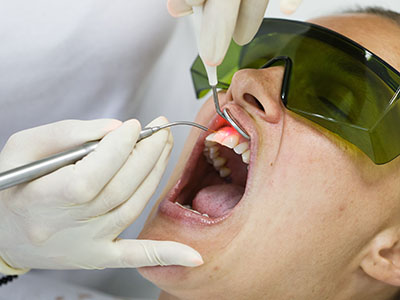
LANAP® (Laser-Assisted New Attachment Procedure) is a minimally invasive, laser-based approach to treating moderate to advanced gum disease. Unlike traditional flap surgery that requires incisions and sutures, LANAP® uses a focused dental laser to remove diseased tissue and bacteria while preserving healthy gum and bone. The goal is to reduce pocket depths, encourage reattachment of supportive tissues, and promote regeneration with less discomfort and a quicker recovery than many conventional surgical options.
For decades, periodontal disease has been managed with mechanical cleaning, scaling and root planing, and when necessary, open flap surgery to access and debride infected root surfaces. While these techniques can be effective, they often involve significant tissue disturbance and a longer healing period. LANAP® was developed to give clinicians a different tool — one that targets the problem beneath the gum line while leaving healthy tissue intact.
Because LANAP® is performed with a specialized dental laser, clinicians can selectively remove inflamed epithelial tissue from periodontal pockets and target bacteria that contribute to disease. This selectivity means there is typically less post-procedural swelling and bleeding compared with traditional surgery. For many patients, the reduced soft-tissue trauma results in a gentler experience without sacrificing clinical outcomes.
Importantly, LANAP® is not a universal replacement for every periodontal procedure; it is an alternative that fits well into a comprehensive periodontal care plan. Your dentist or periodontist will evaluate the extent of bone loss, pocket depths, and overall oral health to determine whether LANAP® is an appropriate option for your needs.
The LANAP® protocol employs the PerioLase® MVP-7TM laser, a device calibrated to interact with diseased soft tissue and pigmented bacteria while sparing healthy connective tissue. The laser’s wavelength is absorbed preferentially by inflamed tissue and the dark pigments of periodontal pathogens, enabling targeted decontamination within the pocket. This focused action reduces collateral damage to surrounding gums and supports better healing.
Beyond removing diseased tissue, the laser energy also assists in creating a biological environment that favors reattachment. By sealing the pocket and stimulating a controlled healing response, LANAP® helps the body reestablish connective tissue attachment to the tooth root. In some cases, this process supports bone regeneration around affected teeth, which can improve long-term stability.
Because the technique is tissue-sparing, surgeons often note improved visualization and access during the procedure. The PerioLase® not only eliminates bacteria but can also help manage bleeding, making it easier for clinicians to work with precision. This combination of decontamination and hemostasis is a key reason LANAP® is regarded as a conservative yet effective periodontal therapy.
Receiving LANAP® typically begins with a thorough periodontal evaluation, including pocket measurements and, when appropriate, radiographic imaging to assess bone levels. On the day of treatment, local anesthesia is used to ensure patient comfort. The procedure itself often involves a sequence of laser passes and mechanical root debridement designed to eliminate inflamed tissue and detoxify the root surface.
One of the advantages of LANAP® is that it generally avoids extensive incisions and sutures. The clinician uses the laser to remove diseased lining from the pocket, followed by ultrasonic or hand instrumentation to clean the roots. A final laser pass helps create a stable clot and promotes a favorable healing environment. The entire process is performed with attention to tissue preservation and precision.
Most patients report minimal intraoperative discomfort and a lower need for opioid or strong analgesic medications afterward. Because LANAP® is minimally invasive, many people are able to return to normal activities more quickly than after traditional periodontal surgery. Your clinician will provide specific post-operative instructions to support uncomplicated healing, including oral hygiene measures and follow-up visits.
Recovery after LANAP® tends to be faster and less painful than recovery from conventional flap surgery. While healing timelines vary depending on the individual and the extent of disease, many patients experience reduced swelling and bleeding, along with less sensitivity at treated sites. Follow-up appointments are an important part of monitoring pocket depth reduction and tissue response over time.
Clinically, LANAP® aims to reduce pocket depths, eliminate infection, and help reestablish healthy attachment of gum tissue to the tooth roots. Improvements in pocket measurements and reduced inflammation are commonly documented during post-treatment evaluations. In certain cases where bone regeneration occurs, the tooth’s long-term prognosis can improve, helping to preserve natural dentition that might otherwise be lost.
Ongoing maintenance is critical to long-term success. After LANAP®, patients typically follow a customized periodontal maintenance schedule that includes professional cleanings, regular pocket monitoring, and meticulous home care. Because periodontal disease is chronic and influenced by systemic and lifestyle factors, continued vigilance helps protect the benefits achieved through laser therapy.
Successful LANAP® treatment relies on both the technology and the clinician’s experience. Look for a dental team that has completed formal LANAP® training and can demonstrate a comprehensive approach to periodontal care — from diagnosis through maintenance. A skilled provider will consider your overall health, risk factors, and treatment goals before recommending a course of action.
When evaluating potential providers, ask about their experience with the PerioLase® MVP-7TM system and how they integrate laser protocols into broader periodontal treatment plans. A thoughtful clinician will explain the expected outcomes, necessary follow-up, and how LANAP® fits alongside non-surgical therapy and other periodontal interventions.
At Fuller Smiles San Fernando Valley, our team approaches periodontal health with a focus on conservative, evidence-based options. We combine advanced technology with individualized care planning to help patients restore gum health while preserving natural tissues whenever possible.
Summary: LANAP® offers a laser-based, minimally invasive method for managing periodontal disease that emphasizes tissue preservation, bacterial control, and improved patient comfort. If you’d like to learn more about whether LANAP® is a suitable option for you, please contact us for more information.

LANAP® stands for Laser Assisted New Attachment Procedure and is a minimally invasive laser protocol for treating periodontitis. The technique uses a specific dental laser to remove diseased tissue and bacteria from periodontal pockets while preserving healthy gum and root surfaces. LANAP® is designed to reduce pocket depth, control bacterial infection, and support the reattachment of gum and connective tissue to the tooth.
The procedure is performed without large incisions or traditional flap surgery, which can reduce post-procedure discomfort and swelling. Because it targets only diseased tissue, LANAP® helps minimize gum recession and sensitivity that sometimes follow conventional periodontal surgery. Many patients and clinicians choose LANAP® when a less invasive option is appropriate for managing periodontal disease.
Traditional periodontal surgery often involves cutting and lifting gum tissue to access infected root surfaces and bone, whereas LANAP® uses a laser to selectively remove diseased tissue without wide incisions. The laser energy specifically targets inflamed epithelial lining and bacteria in periodontal pockets while leaving healthy tissue intact, which can preserve esthetics and reduce recession. This selective approach also usually results in less bleeding and a faster initial recovery period.
In addition to tissue preservation, LANAP® follows a defined clinical protocol that includes laser decontamination and clot stabilization to promote new attachment and potential bone regeneration. While both approaches aim to control infection and halt disease progression, LANAP® provides a less invasive alternative that may be preferable for patients seeking reduced post-operative discomfort and quicker healing.
During a LANAP® session, the clinician begins with a thorough assessment and local anesthesia to ensure patient comfort. The clinician then uses a PerioLase® MVP-7 laser to remove diseased pocket lining and to disinfect the root surface; this step is followed by mechanical debridement when indicated and a final laser pass to stabilize the treated area. The protocol is designed to create a stable fibrin clot that encourages the reattachment of connective tissue to the root surface.
The entire experience is typically less invasive than open-flap surgery and is performed in the dental operatory with standard infection-control measures. Patients usually remain awake and can communicate during the procedure, and most report less intraoperative bleeding and reduced soft-tissue trauma compared with traditional surgical alternatives at comparable stages of periodontal disease.
Recovery after LANAP® is generally quicker and associated with less discomfort than traditional periodontal surgery, though individual experiences vary. Patients are typically advised to follow a gentle oral hygiene routine, avoid hard or crunchy foods for a short period, and refrain from smoking, which can impair healing. The practice will provide specific post-operative instructions including recommendations for gentle rinsing and, when appropriate, temporary changes to brushing and flossing techniques at treated sites.
Follow-up visits are important to monitor healing, assess pocket depth reduction, and reinforce home care. Periodontal maintenance appointments, usually at regular intervals determined by your clinician, are essential to sustain the benefits of LANAP® and to prevent disease recurrence. Adhering to scheduled hygiene visits and practicing consistent daily oral care are key factors in long-term success.
Good candidates for LANAP® are patients diagnosed with moderate to advanced periodontitis who want a less invasive alternative to traditional flap surgery. Suitability depends on a comprehensive periodontal evaluation that considers pocket depths, bone loss patterns, overall oral health, and the patient’s ability to maintain good oral hygiene. Certain medical conditions, uncontrolled systemic diseases, or habits such as heavy tobacco use can affect candidacy and healing potential, so candidacy should be determined on an individual basis.
The final treatment plan may combine LANAP® with non-surgical therapy or other periodontal measures depending on disease severity and patient goals. A thorough clinical and radiographic assessment helps the clinician recommend the most appropriate approach and explain realistic expectations for outcomes and maintenance.
LANAP® aims to reduce periodontal pocket depths, decrease bleeding on probing, and control the bacterial infection that drives periodontitis. By precisely removing diseased tissue and disinfecting the pocket environment, the procedure supports healthier soft tissue contours and can reduce the progression of bone loss around affected teeth. The minimally invasive nature of the protocol often results in less post-operative swelling and a more comfortable recovery for many patients.
Another important potential benefit is the promotion of connective tissue reattachment to the root surface, which can improve tooth stability and may help preserve teeth that otherwise have a poor prognosis. Long-term results depend on effective post-operative care, maintenance therapy, and control of risk factors such as smoking and systemic health issues.
As with any clinical procedure, LANAP® has potential risks and limitations that should be discussed with the treating clinician. Possible issues include transient sensitivity, temporary soft-tissue inflammation, or the rare need for additional therapy if pockets do not sufficiently respond to the initial treatment. Because outcomes depend on disease severity, individual healing response, and ongoing oral hygiene, LANAP® is not a guaranteed cure for all periodontal cases.
Some clinical situations may be better managed with traditional surgical approaches or combined therapies, and the clinician will explain the rationale for selecting LANAP® versus other options. Ensuring the procedure is performed by a properly trained and certified provider and following post-operative instructions are important steps to minimize risks and optimize results.
LANAP® employs a stepwise laser protocol that removes diseased epithelial lining, disinfects the pocket, and creates conditions that favor a stable fibrin clot on the root surface. This clot serves as a scaffold that helps connective tissue reattach to the tooth root rather than having a long junctional epithelium form. By eliminating bacteria and inflamed tissue while preserving healthy structures, the protocol supports a healing environment conducive to new attachment.
In some cases, this biologically favorable environment may be associated with radiographic evidence of bone fill around previously periodontally compromised tooth roots. The degree of regeneration varies and is influenced by patient-specific factors such as defect morphology, systemic health, and adherence to maintenance care, so clinicians monitor healing over months to assess the full effect.
Treatment success after LANAP® is measured by clinical indicators such as reduced pocket depth, decreased bleeding on probing, improved attachment levels, and radiographic stability or improvement of bone. Clinicians typically reassess treated sites at follow-up visits to document healing and to determine whether additional therapy is required. Some patients achieve the desired clinical improvements after a single LANAP® session for affected areas, while others may require adjunctive treatment or staged therapy depending on the extent of disease.
Long-term success also relies on regular periodontal maintenance and effective home care, often with more frequent hygiene visits during the first year after treatment. Your clinician will outline a personalized maintenance schedule and criteria for evaluating progress so that adjustments can be made if needed.
Fuller Smiles San Fernando Valley offers LANAP® as part of its periodontal treatment options at its San Fernando Valley offices, including the Northridge and West Hills locations. Our team evaluates each patient’s periodontal condition and discusses whether LANAP® is an appropriate, evidence-based option based on clinical findings and individual treatment goals.
If LANAP® is recommended, the clinician will explain the procedure steps, expected healing timeline, and follow-up plan so patients can make an informed decision. Scheduling a consultation allows the team to perform a full periodontal assessment and to answer specific questions about how LANAP® might fit into your overall oral health plan.
Take a smiling selfie and we’ll show you what Invisalign® treatment can do for you. Sometimes insurances can cover upto $2500 of invisalign treatment. Call our office or follow the link to find out.