Smile Visualization
Take a smiling selfie and we’ll show you what Invisalign® treatment can do for you. Sometimes insurances can cover upto $2500 of invisalign treatment. Call our office or follow the link to find out.

At the office of Fuller Smiles San Fernando Valley, we take a preventive, evidence-informed approach to oral health. Regular oral exams are the foundation of a long-lasting, comfortable smile — they allow our team to catch problems early, tailor care to each patient, and provide clear guidance for maintaining oral wellness throughout life. Beyond checking teeth, a thorough exam evaluates the gums, soft tissues, bite, and other structures that support a healthy mouth.
Your first comprehensive visit is designed to create a complete picture of your oral health. We begin with a careful review of your medical and dental history and a conversation about any concerns you may have — sensitivity, pain, cosmetic goals, or changes you've noticed. This context helps our clinicians interpret clinical findings and make recommendations that respect your overall health and lifestyle.
After the history, the clinical exam covers the teeth, gums, tongue, cheeks, palate, and the areas around the jaw and neck. We assess gum health, look for signs of decay or wear, evaluate your bite and jaw joint function, and screen for abnormalities such as lesions or unusual tissue changes. If you grind or clench, we note evidence of wear and discuss protective strategies so issues can be managed before they progress.
Diagnostic imaging is often part of a complete exam. Where indicated, we use modern digital x-rays to visualize the roots, bone levels, and structures below the gumline. Once the exam and images are complete, your clinician will review findings with you, outline recommended next steps (if any), and answer questions so you leave with a clear plan and a realistic timeline for care.

Oral health is closely linked to overall health. During an exam we don’t just look for cavities; we watch for signs that may indicate broader medical issues. Inflammation, unexplained bleeding, persistent dry mouth, or persistent oral lesions can sometimes signal systemic conditions that merit attention from your medical provider alongside dental care.
Research increasingly shows connections between oral disease and conditions such as cardiovascular disease, diabetes, and respiratory problems. That means an oral exam can provide valuable information not only for preserving teeth and gums, but also for identifying early warning signs of health changes elsewhere in the body. When we observe potential red flags, we document them and discuss appropriate referrals.
Likewise, many systemic diseases have oral manifestations — for example, certain medications can cause dry mouth that increases cavity risk, and nutritional deficiencies may show up as changes in the soft tissues. By tracking oral findings over time, we help patients and their medical teams address patterns that impact both oral and general well-being.
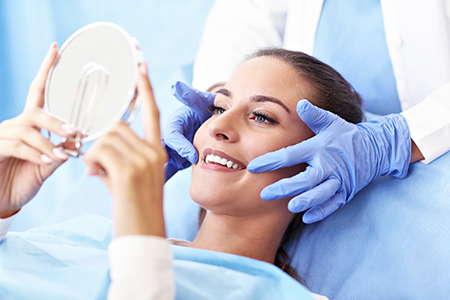
Professional cleanings and routine checkups are the best defense against the small problems that can become big ones. Even with excellent home care, plaque and tartar can build up in areas that are hard to reach with a toothbrush and floss. Our hygienists remove this buildup safely and thoroughly, which lowers the risk of cavities and gum disease and helps keep your mouth feeling fresh.
Checkups are also a chance to reinforce prevention. We’ll discuss nutrition, tobacco and alcohol use, and habits such as clenching that affect your teeth. For parents, regular visits establish good dental routines for children and allow us to monitor growth and development so that any need for orthodontic assessment is identified early.
Consistency matters: regular visits make problems easier to treat and often let us choose less invasive options. During each visit we’ll update your records, compare any new images to previous ones, and adjust home-care recommendations so your daily routine supports long-term oral health.
Beyond cleaning and screening, these appointments are an opportunity to answer your questions about oral hygiene tools, sealant options for children, or strategies for sensitive teeth — practical steps you can take right away to protect your smile.
Visual inspection is essential, but some conditions are hidden beneath the surface. Digital radiography lets us examine tooth roots, supporting bone, and the spaces between teeth with minimal radiation exposure. These images help detect early decay, evaluate bone levels around teeth, and assess the status of existing restorations that can’t be fully seen during a standard exam.
Digital x-rays are fast and efficient: images appear on-screen immediately, can be enhanced for clearer interpretation, and are easily stored in your electronic record for future comparison. Because the process is so streamlined, we can integrate radiographic review into most comprehensive exams without causing significant delays to your appointment.
When more complex three-dimensional information is needed — for example, to evaluate impacted teeth, plan implant placement, or investigate complicated anatomy — cone-beam computed tomography (CBCT) provides detailed 3D images. CBCT is used selectively when its detailed perspective will materially improve diagnosis or treatment planning.
Not every visit requires the same set of images. The type of radiograph we recommend depends on your symptoms, history, and the clinical questions we need to answer. For routine preventive visits, small-area images are often enough; when planning restorative or surgical care we may recommend additional views to ensure accuracy and safety.
Common types of dental images and their uses include:
Periapical x-ray - Focuses on a single tooth from crown to root, valuable for assessing root health and bone support.
Bitewing x-ray - Shows the crowns of the back teeth and is especially useful for spotting interproximal decay.
Full Mouth Series - A collection of periapical and bitewing images that document the condition of all teeth.
Panoramic Film (panorex) - Provides a broad view of both jaws, erupting and impacted teeth, and overall jaw structure.
Cephalometric Film - A side-profile view often used in orthodontic assessment and growth evaluation.
When advanced 3D imaging is necessary, CBCT gives precise spatial information that supports safe surgical planning and complex restorative work. Your clinician will explain why a particular image is recommended, what it will show, and how it informs the proposed care so you can make an informed decision together.
At the office of Fuller Smiles San Fernando Valley, our goal is to make oral exams informative and reassuring. If you have questions about what a comprehensive exam includes or whether you need imaging, please contact us for more information.
Yes. We always welcome new patients and their families for care. Feel free to give us a call or reach out to us online to schedule a first visit or for any additional information on our office. We look forward to hearing from you!
Routine dental checkups and professional cleanings help ensure your smile remains in tip-top condition and that any developing problems receive the prompt care they require. While it's a good idea to schedule a checkup and cleaning twice a year, longer or shorter intervals between routine visits depend on your specific needs.
We understand that life gets complicated and busy, and for various reasons, you haven't been able to get to the dentist for care. Don't worry; it's always a good time to get back in touch with the health of your smile.
At Fuller Smiles San Fernando Valley, we offer skilled and compassionate care to address a wide range of dental needs. Whether you need a simple checkup and cleaning, restorations, periodontal treatment, root canal therapy, or the replacement of missing teeth to get your smile back into shape, we provide precise, gentle, stress-free treatment to give you a smile that is as beautiful as it is healthy.
Give us a call today; we're happy to address all your questions and concerns about getting your smile back in tip-top condition.
For pregnant women, practicing good oral care and seeing the dentist to maintain a healthy smile is considered an important component of prenatal care. Researchers have found that pregnancy not only increases the risk of oral health problems, but these problems may also lead to pregnancy complications. At the office of Fuller Smiles San Fernando Valley, we provide the skilled and compassionate care required to help expectant mothers keep their teeth and gums in tip-top condition. While certain procedures are not recommended during pregnancy, we provide the necessary care and take all the necessary precautions required.
Thanks to advances in modern dentistry, teeth that have been affected by a range of imperfections or that have sustained damage from trauma or dental decay can be restored to produce a naturally beautiful looking and functional smile.
As skilled and experienced providers of care, our office can effectively improve and enhance the appearance of teeth that are stained, discolored, misshapen, chipped, fractured, gapped, crowded, or broken down due to dental decay. At the office of Fuller Smiles San Fernando Valley, we offer a comprehensive selection of the leading-edge cosmetic solutions from teeth whitening procedures, dental bonding, tooth-colored fillings, and veneers, to prosthetic solutions and dental implants to rebuild complete and beautiful smiles.
Contact our office to learn more about the many ways we can help you create the smile you've always wanted.
If you're visiting Fuller Smiles San Fernando Valley for the first time, it is helpful that you contact your former dental office and have your records sent over to us. Make note of any problems you may have so that you can discuss them with your dentist.
To provide efficient service, we ask you to please bring your insurance card, an ID, plus any referral slips or diagnostic records given to you by another office. If you are taking medications, please note or make a list of what they are as you will need to provide that information.
Yes! We assure you that both you and your family will be in good hands at the office of Fuller Smiles San Fernando Valley.
We do our best to make sure every patient who steps into our office for care is put at ease. We provide precise and gentle care and our skilled, compassionate team strives to make every visit stress-free. You can rest assured that your smile is in the best of hands and that we are doing all we can to ensure your comfort throughout every procedure. While we always take the time to explain every step in care, feel free to ask us any questions about local anesthesia and methods of dental sedation.
At the office of Fuller Smiles San Fernando Valley, we strive to provide the highest quality of care to address all your dental needs. Once we've had the opportunity to examine your smile, we can give you a clear picture of any dental issues that are present, along with a quote for what the cost of treatment will be. The cost of care all depends upon the extent and complexity of issues affecting the health or appearance of your smile and the types of procedures that are required. Our goal is to make dental care more affordable so that you can begin treatment without any additional stress or delay.
Keep in mind that with routine dental checkups and periodic care, we can help prevent dental disease while treating emerging problems early in their onset to avoid larger issues and more expensive care down the road.
Routine dental checkups and preventive care procedures may be covered under your dental insurance plan requiring little to no out-of-pocket expense. We invite you to check our financial information page or give us a call to find out if our office participates with your plan, and if you have any other questions about dental insurance, dental savings plans, forms of payment, or financing options. We welcome your inquiries and do our best to help you begin care without additional stress or delay.
If you've lost a tooth due to injury, decay, gum disease, or any other reason, we recommend dental implants to replace missing teeth. Dental implants come the closest to replicating the look, feel, and function of your natural teeth.
Absolutely! Both flossing and brushing regularly are equally important to maintain your oral health. While brushing cleans the surface of your teeth, flossing cleans in between them. Flossing is important to prevent plaque buildup, which can cause gums to recede and lead to periodontal disease.
Even if you have dentures, it is still necessary to see a dentist! Dental checkups help ensure that your dentures are comfortable, fitting properly, and that there are no other problems. Beyond assessing your dentures, our dentist will also perform a thorough examination of the jawbone, and surrounding soft tissues both inside the mouth, the face, and neck, to confirm that you remain in good oral health.
Emergency dental care is a service we hope you'll never need- but if you do, the office of Fuller Smiles San Fernando Valley is here for you!
Whether you're suffering from a chipped tooth, toothache, or any problem affecting your oral health, you can be sure to get the prompt attention and compassionate care you require at our office. Patient care and comfort are our top priorities, and we offer a comprehensive range of the most advanced services to address a broad spectrum of dental needs.
While the pain of a toothache is one of the more common reasons that patients come to our office for emergency dental care, we also promptly treat emergencies that are not necessarily painful like crowns that have been dislodged and broken dentures that leave embarrassing gaps in one's smile.
You can rest assured that your oral health is in the best of hands at our office. We'll quickly determine exactly what's wrong, explain your treatment options, and then provide the precise and gentle care you require to alleviate your discomfort and get you back on the path to oral health and wellness.
Your health and comfort are our top priorities. If your dental emergency is painful, if it affects the appearance of your smile, or if you suspect that an infection is present, our office will make every effort to see you as soon as possible for care.
At the office of Fuller Smiles San Fernando Valley, we welcome patients of all ages for care and offer a comprehensive range of services designed to help every member of your family maintain a beautiful and healthy smile. Whether you or a loved one needs a routine checkup and cleaning, fillings, same-day crowns, a cosmetic smile makeover, the replacement of missing teeth or require the services of a skilled and compassionate emergency dentist, you can rely on our office for the highest quality care.
For more information on our office and the many services we provide, or to schedule an appointment for care, give us a call today.
During a comprehensive oral exam our team performs a systematic evaluation of your teeth, gums, bite and soft tissues to establish an oral health baseline. We review your medical and dental history, ask about any symptoms, and note habits such as clenching or grinding that can affect your oral health. Diagnostic images are recommended as needed to view structures beneath the surface and to inform an accurate diagnosis.
After the exam we summarize findings and explain recommended next steps, including any preventive measures or restorative care that may be appropriate. The process is designed to be collaborative so you can make informed decisions about your oral health. Our goal is to identify issues early when treatment is simpler and outcomes are better.
Most patients benefit from routine oral exams every six months because regular visits help catch problems in their earliest stages, when they are easiest to treat. Frequency may be adjusted based on individual risk factors such as a history of periodontal disease, extensive restorations, dry mouth, or a weakened immune system. Your clinician will recommend a personalized recall interval based on your exam findings and overall health.
Adhering to the recommended schedule supports long-term oral health and reduces the need for more invasive procedures later. Routine exams also give our hygienists a chance to remove plaque and tartar that you may miss at home. Consistent preventive care is one of the most effective ways to maintain a healthy, functional smile.
Dental x-rays reveal conditions that cannot be seen during a visual exam, such as decay between teeth, bone loss, impacted teeth, and abnormalities in the jaw. Modern digital radiography minimizes radiation exposure while producing clear images that can be reviewed immediately and stored in your electronic record. The specific type and frequency of x-rays are selected based on your age, symptoms, and clinical findings.
These images assist in diagnosing problems early and in creating precise treatment plans that protect tooth structure and overall oral function. Digital radiographs also allow clinicians to compare images over time to monitor disease progression or healing. Sharing and reviewing images with the patient supports informed, transparent care decisions.
An oral cancer screening is a focused part of the oral exam where the clinician inspects the lips, tongue, floor of the mouth, cheeks, palate, and oropharynx for any suspicious lesions, color changes, or lumps. The exam may include palpation of the head and neck to check for unusual swelling or enlarged lymph nodes. When indicated, adjunctive tools or referral for biopsy are used to ensure a definitive diagnosis.
Early detection of oral cancer greatly improves treatment outcomes, so clinicians emphasize routine screening as part of preventive care. If any abnormality is found, we discuss next steps clearly and coordinate appropriate follow-up. Screening is quick, painless, and an essential safety measure during regular checkups.
The mouth often shows early signs of systemic conditions, so a thorough oral exam can reveal clues related to diabetes, autoimmune disorders, nutritional deficiencies, and more. Symptoms such as persistent dry mouth, unusual ulcerations, gingival inflammation, or changes in tissue texture may prompt further medical evaluation. Clinicians integrate oral findings with your medical history to recommend appropriate medical referrals when needed.
Recognizing oral manifestations of systemic disease supports timely coordination with your primary care provider or specialist and can contribute to better overall health management. Regular dental visits create a record of changes over time, improving the chances of detecting health issues early. This collaborative approach reinforces the connection between oral health and whole-body wellness.
A child’s first oral exam focuses on making the visit comfortable while assessing early development of teeth, jaws, and oral habits. The clinician reviews medical history, checks for proper eruption patterns, evaluates for cavities, and discusses behaviors such as thumb sucking or pacifier use that can affect development. Education for parents about brushing, flossing, diet, and fluoride use is an important part of the appointment.
Establishing a positive relationship with the dental team helps reduce anxiety and encourages lifelong preventive habits. The exam also allows early identification of issues that may benefit from timely intervention, such as space management or guidance for jaw growth. Regular childhood exams set the foundation for a healthy adult dentition.
Assessment of gum health includes measuring pocket depths, checking for bleeding on probing, evaluating gum recession and tooth mobility, and reviewing radiographs for bone level changes. These findings are used to stage periodontal health and estimate risk for future disease progression. Clinicians also consider systemic factors, medications, and lifestyle habits such as tobacco use when evaluating periodontal risk.
When early signs of gum disease are present, targeted cleaning, improved home care instructions, and more frequent monitoring are implemented to halt progression. For established periodontal disease, the practice offers a range of therapies tailored to the severity of the condition. Ongoing periodontal management focuses on controlling infection, preserving supporting structures, and maintaining long-term stability.
Cone-beam computed tomography (CBCT) is reserved for situations where detailed three-dimensional views are necessary, such as complex implant planning, evaluation of impacted or extra teeth, assessment of jaw pathology, and advanced endodontic cases. CBCT provides spatial detail not available with standard 2D films, allowing precise measurement of bone volume and the locations of critical anatomical structures. The decision to use CBCT is based on clinical need and is made to increase diagnostic accuracy and treatment safety.
Because CBCT exposes patients to higher levels of radiation than standard digital x-rays, clinicians follow the principle of justification and selection to ensure the benefit outweighs the risk. When CBCT is recommended, we explain what the scan will show and how it informs the proposed treatment. Using 3D imaging selectively improves outcomes for complex procedures while minimizing unnecessary exposure.
Professional cleanings performed by a hygienist remove plaque and hard‑to‑reach tartar that regular brushing and flossing cannot eliminate, which helps prevent cavities and gum disease. During the exam visit, the hygienist also assesses oral hygiene effectiveness, provides individualized instruction, and may apply preventive treatments when appropriate. Cleanings complement the clinician’s exam findings and support long-term health of teeth and gums.
Regular professional care reduces inflammation and bacterial load, improving both oral comfort and clinical measurements used to monitor disease. The hygienist documents changes over time, enabling early intervention if problems begin to develop. Combining cleanings with routine exams is a cornerstone of preventive dental care.
Evaluation of jaw function includes observing range of motion, listening for joint noises, palpating muscles and the temporomandibular joint for tenderness, and asking about symptoms such as pain, locking, or headaches. The clinician may assess occlusion and wear patterns on the teeth that indicate bruxism or abnormal forces. When indicated, additional diagnostic tools or referral to a specialist are used to clarify the cause of TMJ symptoms.
Early recognition of functional issues allows conservative therapies—such as behavior modification, appliance therapy, or physical therapy—to be considered before problems progress. Care plans focus on reducing pain, protecting the teeth, and restoring comfortable function. Ongoing monitoring during regular exams ensures that treatment remains effective and is adjusted as needed.
Take a smiling selfie and we’ll show you what Invisalign® treatment can do for you. Sometimes insurances can cover upto $2500 of invisalign treatment. Call our office or follow the link to find out.