Smile Visualization
Take a smiling selfie and we’ll show you what Invisalign® treatment can do for you. Sometimes insurances can cover upto $2500 of invisalign treatment. Call our office or follow the link to find out.

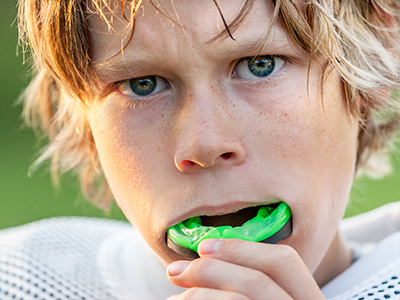
Sports and active recreation bring great benefits to physical and mental health, but they also carry a risk of dental and facial injury. A direct blow, a fall, or an accidental collision can cause chipped or broken teeth, soft-tissue lacerations, and even jaw injuries that affect chewing and long-term oral health. Wearing a properly fitted mouthguard significantly reduces the force transmitted to teeth and surrounding structures, lowering the chance of acute damage during play.
Beyond obvious impacts, mouthguards help protect against hidden problems that can be costly and disruptive—such as root fractures, tooth displacement, or traumatic damage to dental restorations. For contact sports and many recreational activities, a mouthguard is a simple preventive measure that can spare patients lengthy repairs, persistent pain, and time away from the game.
Coaches, parents, and players often focus on helmets and padding, which are important, but oral protection deserves equal attention. A mouthguard works as part of a broader injury-prevention strategy: it cushions blows, stabilizes the jaw, and can reduce the risk of concussions by absorbing some impact forces. Encouraging routine use of mouthguards is an effective way to protect long-term oral health at every age.
Whether someone is playing organized sports or enjoying weekend recreation, the right mouthguard can be the difference between a minor scare and a dental emergency. For athletes with ongoing dental care needs, proactive protection should be part of every training plan.
Not all mouthguards are manufactured the same, and the differences matter for protection, comfort, and durability. Stock mouthguards are pre-formed and ready to wear, which makes them convenient but often bulky and poorly fitted. Boil-and-bite designs allow some customization by softening the material in hot water and shaping it to the teeth—these offer better fit than stock mouthguards but still fall short of a fully tailored solution.
Custom mouthguards are made from oral impressions taken in a dental office and fabricated in a lab to match an individual’s bite and anatomy. Because they conform precisely to the teeth and gum line, custom guards provide superior retention, coverage, and comfort. They are generally thinner and less likely to impede breathing or speech, which increases the likelihood that an athlete will keep them in place during play.
When selecting a type, patients should weigh factors like sport intensity, frequency of play, and any preexisting dental work. For casual players who participate infrequently, a boil-and-bite guard can offer a reasonable level of protection. For contact athletes, those with fixed dental appliances, or anyone seeking optimal fit and comfort, a custom-fitted guard is typically the most protective option.
It’s also important to consider material quality and design features—multi-layer constructions and shock-absorbing cores perform better under impact. A discussion with your dental provider will help match a mouthguard’s characteristics to your sport and personal needs.
Custom mouthguards begin with a careful assessment of the patient’s bite and oral anatomy. A dental professional takes precise impressions or uses digital scanning to capture the shape of the upper teeth and surrounding tissues. These records are used to create a model on which the mouthguard is fabricated, allowing the laboratory to produce a device that fits snugly without excess bulk.
The tailored fit of a custom guard enhances protection in two ways: it spreads impact forces more evenly across the dental arch, and it minimizes movement of the appliance during sudden collisions. Because the guard conforms closely to the teeth, athletes experience improved comfort, easier breathing, and clearer speech—factors that increase compliance and reduce the temptation to remove the guard mid-activity.
Materials for custom guards can vary in thickness and composition depending on the sport and the patient’s needs. Advanced designs may incorporate layered plastics or thermoplastic materials that combine resilience with cushioning. For younger athletes whose teeth and jaws are still developing, custom solutions can be adjusted or remade as growth progresses, ensuring protection remains effective over time.
Working with a dental professional when choosing a custom guard also allows for integration with other oral care considerations. The dentist can advise on how a guard interacts with orthodontic appliances, crowns, or implants and recommend the best fabrication approach to protect both natural teeth and restorations.
Patients who wear braces, retainers, or have crowns and implants require special attention when it comes to mouthguard selection. Fixed orthodontic appliances can create additional injury risk if a guard does not account for brackets and wires; a properly designed mouthguard provides extra space and protective coverage to prevent soft-tissue cuts and damage to the appliances themselves.
For athletes with dental restorations or implants, the mouthguard should offer stable support to avoid placing uneven forces on restored teeth. A custom device designed with those elements in mind can prevent secondary damage and protect surrounding tissues. This tailored approach helps maintain oral function and reduces the likelihood of emergency dental visits following a blow to the face.
High-impact sports—such as football, hockey, lacrosse, and martial arts—demand the most robust protection. In these contexts, the emphasis is on retention and shock absorption; a guard that shifts during play loses much of its protective value. Custom-fitted options, often with reinforced sections or multi-layer construction, provide the resilience necessary for sustained contact and repeated impacts.
Communication between athlete, parent, coach, and dental provider ensures that the mouthguard chosen is appropriate for both the sport and the individual’s oral health profile. This team approach leads to better protection and greater peace of mind for everyone involved.
Maintaining a mouthguard properly extends its life and preserves hygiene. After each use, rinse the guard with cool water and brush it gently with a soft toothbrush and mild soap or non-abrasive toothpaste to remove saliva and debris. Allow it to air-dry fully before placing it in a ventilated storage case to prevent bacterial growth and material degradation.
Keep mouthguards away from direct heat sources and out of hot environments, such as closed cars in warm weather, which can warp the material and compromise fit. Periodic deep cleaning with denture cleaner or a soak recommended by your dental professional can help maintain freshness without damaging the device.
Regular inspection is essential: look for cracks, thinning, or changes in shape that indicate the guard no longer offers reliable protection. Children and adolescents may need replacements more often due to changes in tooth position and jaw growth. Likewise, any athlete who experiences a significant blow to the face should have their mouthguard evaluated for hidden damage and ensure it still fits correctly.
Replacing a mouthguard at the first sign of wear helps maintain protective performance and reduces the risk of injury. Your dental team can advise on recommended replacement intervals based on your sport, usage frequency, and the type of guard you use.
At Fuller Smiles San Fernando Valley, we prioritize practical, evidence-based guidance to help patients protect their smiles during sports and recreational activities. If you have questions about which mouthguard is best for you or a family member, or if you’d like to schedule a consultation for a custom-fitted device, please contact us for more information.

A sports mouthguard is a removable dental appliance made from resilient materials that fits over the teeth to cushion and distribute forces from impacts. Most mouthguards are designed to cover the upper teeth, although some situations call for lower or dual-arch coverage to protect the entire bite. Individuals with braces, orthodontic appliances or complex dental restorations often require a specially designed guard to accommodate hardware and maintain protection.
Beyond protecting teeth, a properly fitted mouthguard helps reduce soft-tissue injuries to the lips, cheeks and tongue and can limit trauma to the jaw. Mouthguards are lightweight and intended to be comfortable so athletes are more likely to wear them consistently during practice and competition. Choosing the right style and fit is an important factor in both protection and wearer compliance.
Sports-related impacts can cause chipped or knocked-out teeth, lacerations and jaw injuries that may require extensive dental treatment and long-term care. Wearing a mouthguard significantly lowers the likelihood of these dental and facial injuries by absorbing and dispersing impact energy away from vulnerable oral structures. For youth athletes, who may be more prone to falls and collisions, prevention is especially critical to avoid disruption of developing teeth and orthodontic treatment.
Consistent use of a properly fitting mouthguard also reduces the risk of soft-tissue cuts from brackets and wires and can help athletes maintain performance by minimizing pain and distraction after incidental contacts. Coaches, trainers and dental professionals routinely recommend mouthguards as a straightforward preventive measure that supports both safety and uninterrupted participation. Proper education about selection, fit and care increases the chances that athletes will wear their mouthguards when it matters most.
There are three common categories of mouthguards: stock or ready-to-wear, boil-and-bite and custom-made devices fabricated by a dental professional. Stock guards are pre-formed and come in standard sizes but often provide a poor fit and limited protection. Boil-and-bite guards are softened in hot water and then molded by biting down to improve fit, offering better comfort than stock options but still lacking the precision of custom appliances.
Custom mouthguards are made from impressions or digital scans of a patient’s teeth and are tailored for retention, comfort and optimal protection. They typically offer superior fit, easier breathing and clearer speech compared with over-the-counter options, which can increase consistent use. When protection, comfort and longevity are priorities, a custom guard made by a dentist is generally the preferred choice.
Custom mouthguards provide a personalized fit that improves retention, comfort and overall protection during impact events. Because they are fabricated to match the patient’s occlusion and oral anatomy, custom guards reduce movement during play and minimize the need for frequent adjustments or replacements. The improved fit also helps athletes breathe and communicate more effectively while wearing the appliance.
A dentist evaluates individual needs such as the presence of braces, previous dental restorations or specific sport demands and then recommends the most appropriate design and material. For athletes who want the best combination of protection and comfort, a professionally made mouthguard offers advantages in durability and performance over generic alternatives. Fuller Smiles San Fernando Valley can provide guidance and fabricate custom guards tailored to each patient’s requirements.
Any athlete participating in sports with a risk of facial contact or falls should consider wearing a mouthguard, including organized and recreational activities. Sports such as football, hockey, lacrosse, boxing, martial arts and many field sports present higher risks, but even noncontact activities can involve incidental collisions that threaten teeth and soft tissues. Young athletes, players with orthodontic appliances and competitors involved in high-speed play are particularly likely to benefit from added protection.
Parents, coaches and athletes should evaluate the level of contact and the potential for projectiles or hard surfaces when deciding on mouthguard use. When dental restorations, crowns or implants are present, a customized design can better protect both natural teeth and prosthetic work. Ultimately, the decision to wear a mouthguard should be made proactively in consultation with a dental professional to ensure proper fit and function.
The process for making a custom mouthguard begins with a clinical evaluation to assess dental anatomy, orthodontic appliances and specific sport-related needs. The dentist records impressions or uses a digital intraoral scanner to capture an accurate model of the teeth and bite; many modern practices use digital impressions to streamline fabrication. The impressions or digital files are then used by the dental laboratory to fabricate a layered, vacuum-formed or heat-processed appliance that balances protection, comfort and thickness for the intended sport.
After the appliance is fabricated, the patient returns to the office for a fitting where the dentist checks retention, occlusion and breathing while making any necessary adjustments. Final polishing and patient education on insertion, removal and care complete the process so the athlete can begin using the guard safely. The practice follows quality standards to ensure the finished mouthguard performs as intended and fits comfortably.
Rinse the mouthguard with cool water immediately after use and brush it gently with a soft toothbrush and nonabrasive toothpaste or mild soap to remove debris and bacteria. Avoid using hot water or harsh chemical cleaners that can warp or damage the material, and do not place the appliance near heaters or in direct sunlight. For deeper cleaning, periodically soak the mouthguard in a denture cleaner or an antimicrobial solution recommended by your dentist, following product directions and rinsing thoroughly before reinserting.
Store the mouthguard in a ventilated, rigid case when not in use to protect it from crushing and to allow drying, which helps limit bacterial growth. Keep the case clean and replace it if it becomes cracked or contaminated. Regular inspection for wear, tears or distortion is important; if you notice changes in fit or integrity, schedule an evaluation with your dentist for repair or replacement.
Yes, mouthguards can and should be adapted to protect orthodontic appliances, crowns, bridges and other dental restorations. For patients with braces, a mouthguard with extra space and cushioning prevents brackets and wires from cutting the lips and cheeks during impact and helps protect the teeth from direct blows. Specially designed appliances accommodate appliances while maintaining retention and comfort so athletes can wear them consistently during activity.
For complex restorative work or dental implants, the dentist will evaluate the situation and recommend a mouthguard design that minimizes load transfer to vulnerable areas. In some cases, a custom dual-arch design or additional padding may be indicated to balance protection and function. Consulting your dentist ensures the chosen solution addresses both orthodontic and restorative considerations safely.
Replacement frequency depends on material wear, changes in fit and the age of the athlete, with growing children requiring more frequent updates. Inspect the mouthguard regularly for thinning, tears, deformation or loss of retention; any visible damage or a noticeable change in fit warrants replacement to maintain protective performance. After significant dental work or orthodontic adjustments, a new guard is often necessary to accommodate altered tooth positions and ensure continued protection.
Even absent visible damage, older mouthguards can lose resilience and should be evaluated periodically by a dental professional. Keep records of when the appliance was issued and bring the mouthguard to dental visits for assessment. Proactive replacement ensures a consistently protective and comfortable appliance throughout seasons and stages of dental development.
To obtain a custom sports mouthguard at Fuller Smiles San Fernando Valley, schedule a consultation so the dental team can evaluate your needs and discuss the best design options for your sport and oral condition. During the appointment the dentist will perform an oral exam, capture impressions or digital scans and recommend a material and thickness that balance protection and comfort. Once the appliance is fabricated, a fitting appointment ensures proper retention, bite alignment and any minor adjustments before the athlete uses the guard in play.
The practice emphasizes patient education, teaching proper insertion, removal and care to maximize the mouthguard’s lifespan and function. Follow-up visits can address wear, fit changes or concerns after the season, and the dental team will advise when replacement or modification is necessary. Contact the office to arrange an evaluation and learn about the custom solutions available for athletes of all ages.
Take a smiling selfie and we’ll show you what Invisalign® treatment can do for you. Sometimes insurances can cover upto $2500 of invisalign treatment. Call our office or follow the link to find out.